Connect With Us
Blog
Items filtered by date: April 2026
Tuesday, 21 April 2026 00:00
How Down Syndrome Can Affect Foot Health
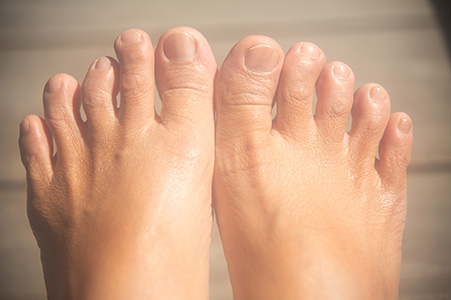
Down syndrome can affect the feet in several ways, often leading to pain and difficulty with walking. Many people with this condition have flat feet, which means the arch is low or absent, causing the foot to roll inward and affect balance. The front of the foot may also be wider than average, increasing the risk of a bunion, a bony bump that forms at the base of the big toe. Skin problems like calluses and dry or cracked skin are also common and can become painful. Toenail issues, including fungal or ingrown nails, may develop as well. Many of these changes can make it harder to find properly fitting shoes and may lead to ongoing foot pain. A podiatrist can evaluate foot structure, manage skin and nail conditions, and provide custom orthotic devices to improve alignment and support. If you or a loved one have foot pain resulting from Down syndrome, it is suggested that you make an appointment with a podiatrist for treatment.
When dealing with systemic disease of the feet, it is extremely important to check the affected areas routinely so that any additional problems are caught quickly. If you have any concerns about your feet and ankles contact Joan Oloff, DPM from Los Gatos Foot and Ankle . Our doctor will assist you with all of your podiatric needs.
Systemic Diseases of the Feet
Systemic diseases affect the whole body, and symptoms usually are displayed in the feet. This condition can make a patient’s ability to walk unbearable. Systemic diseases include gout, diabetes mellitus, neurological disorders, and arthritis.
Gout – is caused by an excess of uric acid in the body. Common symptoms include pain, inflammation, and redness at the metatarsal/phalangeal joint of the base big toe. Gout can be treated by NSAIDs to relieve pain and inflammation, and other drugs that lower the acid levels in the body.
Diabetes mellitus – is an increase in the level of blood sugar that the body cannot counteract with its own insulin. Failure to produce enough insulin is a factor in Diabetes.
Diabetes of the Feet
Diabetic Neuropathy – may lead to damaged nerves and affect the feet through numbness and loss of sensation.
Peripheral Vascular Disease – can restrict the blood flow to the feet, and often times lead to amputation of the feet.
If you have any questions please contact our office located in Los Gatos, CA . We offer the newest diagnostic and treatment technologies for all your foot and ankle needs.
Friday, 17 April 2026 00:00
Arthritis Can Cause Pain in the Feet and Ankles

If you are suffering from tenderness, pain, or stiffness in the joints of your feet or ankles, call us to schedule an appointment.
Tuesday, 14 April 2026 00:00
Ankle Fractures and the Importance of Early Care
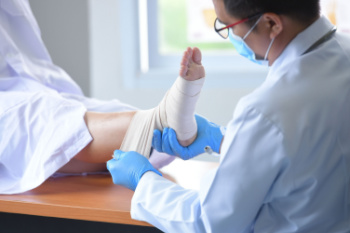
An ankle fracture is a break in one or more of the bones that form the ankle joint, often caused by twisting injuries, falls, or high-impact activities. These injuries are common in men below fifty, and may occur when the joint is exposed to forces up to five times one’s body weight. Risk factors include sports participation, wearing improper footwear, and poor balance. Symptoms often include pain, swelling, bruising, and difficulty bearing weight. Prompt evaluation is essential to ensure proper healing and to prevent long-term complications. A podiatrist can diagnose the injury, provide appropriate treatment, and guide recovery through supportive care and rehabilitation. If you have symptoms of a broken ankle, it is suggested that you promptly consult a podiatrist who can effectively treat this condition.
test
Tuesday, 07 April 2026 00:00
Wound Care in Podiatry
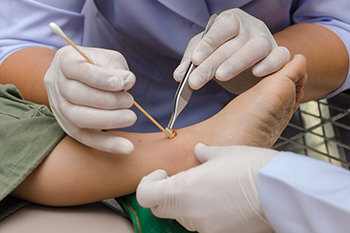
Wound care is an important medical specialty focused on the treatment and management of acute and chronic wounds, especially in the feet where healing can be more complex. Patient preferences on wound care may reflect attitudes and beliefs, possibly based on education. Some types of foot wounds may develop from pressure, injury, poor circulation, or complications related to conditions such as diabetes. Risk factors include reduced blood flow, nerve damage, infection, and prolonged pressure on certain areas. Common types of foot wounds include ulcers, cuts, and slow healing sores that can worsen without proper care. A podiatrist plays a key role by providing debridement, infection control, and pressure relief to promote healing. Early treatment helps prevent serious complications. If you have any type of foot wound, it is suggested that you promptly consult a podiatrist who can take your preferences into account and offer appropriate treatment solutions.
Wound care is an important part in dealing with diabetes. If you have diabetes and a foot wound or would like more information about wound care for diabetics, consult with Joan Oloff, DPM from Los Gatos Foot and Ankle . Our doctor will assess your condition and provide you with quality foot and ankle treatment.
What Is Wound Care?
Wound care is the practice of taking proper care of a wound. This can range from the smallest to the largest of wounds. While everyone can benefit from proper wound care, it is much more important for diabetics. Diabetics often suffer from poor blood circulation which causes wounds to heal much slower than they would in a non-diabetic.
What Is the Importance of Wound Care?
While it may not seem apparent with small ulcers on the foot, for diabetics, any size ulcer can become infected. Diabetics often also suffer from neuropathy, or nerve loss. This means they might not even feel when they have an ulcer on their foot. If the wound becomes severely infected, amputation may be necessary. Therefore, it is of the upmost importance to properly care for any and all foot wounds.
How to Care for Wounds
The best way to care for foot wounds is to prevent them. For diabetics, this means daily inspections of the feet for any signs of abnormalities or ulcers. It is also recommended to see a podiatrist several times a year for a foot inspection. If you do have an ulcer, run the wound under water to clear dirt from the wound; then apply antibiotic ointment to the wound and cover with a bandage. Bandages should be changed daily and keeping pressure off the wound is smart. It is advised to see a podiatrist, who can keep an eye on it.
If you have any questions please contact our office located in Los Gatos, CA . We offer the newest diagnostic and treatment technologies for all your foot and ankle needs.
