Connect With Us

Tuesday, 14 April 2026 00:00
Ankle Fractures and the Importance of Early Care
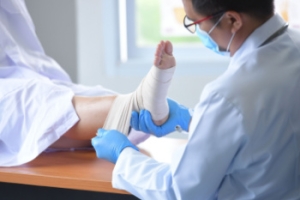
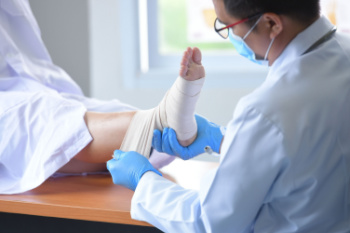
An ankle fracture is a break in one or more of the bones that form the ankle joint, often caused by twisting injuries, falls, or high-impact activities. These injuries are common in men below fifty, and may occur when the joint is exposed to forces up to five times one’s body weight. Risk factors include sports participation, wearing improper footwear, and poor balance. Symptoms often include pain, swelling, bruising, and difficulty bearing weight. Prompt evaluation is essential to ensure proper healing and to prevent long-term complications. A podiatrist can diagnose the injury, provide appropriate treatment, and guide recovery through supportive care and rehabilitation. If you have symptoms of a broken ankle, it is suggested that you promptly consult a podiatrist who can effectively treat this condition.
test
Published in
Blog
Tagged under
Tuesday, 14 April 2026 00:00
All About Broken Ankle
Broken ankles or “ankle fractures” are injuries that occur when the bones that make up the ankle joint are broken. Ankle injuries are some of the most common bone and joint injuries. The ankle joint is made up of three bones that join. The tibia is the main bone, and it makes up the inside of the anklebone. The fibula is a smaller bone, and it makes up the outside of the anklebone. A membrane called the joint capsule is lined with a layer called the synovium, which covers the entire joint. The synovium produces synovial fluid which allows for the joint surfaces to move.
An ankle becomes broken when the joint is stressed beyond the strength of its limits. When an ankle is fractured, ligaments may also tear at the same time. Fractures often occur to the ankle rolling or twisting in an unusual way. At times, a fracture may even be caused by an extreme force applied to the joint.
Symptoms of a broken ankle include pain, swelling, bruising, discoloration, numbness, and an inability to move the toes. If you have a broken ankle, you may also hear something tear or snap when you initially suffered the injury. If you have pain from a broken ankle, beware that the pain will not always come from the exact area of the fracture; you may also experience pain from associated foot fractures. The swelling you may experience can suggest that soft tissue damage may have occurred due to the injury.
There are differences between an ankle fracture and an ankle sprain. The difference is that a fracture or break in the bone is required to classify an injury as a broken ankle. An ankle sprain occurs when there is a tear or disruption of ligaments in the ankle. In some cases, the prognosis of an ankle sprain may be worse than that of a fracture.
X-rays are the most common way to diagnose a broken ankle. X-rays show if the ankle is broken and where exactly the fracture is located. It will also show how many pieces of broken bone there are. A second method of testing to see if an ankle is broken is a stress test. To do this, the doctor will put pressure on the ankle and perform a stress test to determine if the fracture requires surgery. Other methods for diagnosis include CT scans and MRI scans.
If you are suffering from a broken ankle, consult with your podiatrist immediately to receive a proper diagnosis and treatment.
Published in
Featured
Tagged under
Tuesday, 07 April 2026 00:00
Wound Care in Podiatry
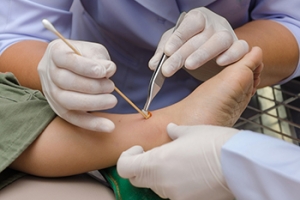
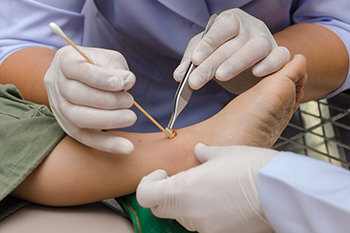
Wound care is an important medical specialty focused on the treatment and management of acute and chronic wounds, especially in the feet where healing can be more complex. Patient preferences on wound care may reflect attitudes and beliefs, possibly based on education. Some types of foot wounds may develop from pressure, injury, poor circulation, or complications related to conditions such as diabetes. Risk factors include reduced blood flow, nerve damage, infection, and prolonged pressure on certain areas. Common types of foot wounds include ulcers, cuts, and slow healing sores that can worsen without proper care. A podiatrist plays a key role by providing debridement, infection control, and pressure relief to promote healing. Early treatment helps prevent serious complications. If you have any type of foot wound, it is suggested that you promptly consult a podiatrist who can take your preferences into account and offer appropriate treatment solutions.
Wound care is an important part in dealing with diabetes. If you have diabetes and a foot wound or would like more information about wound care for diabetics, consult with Joan Oloff, DPM from Los Gatos Foot and Ankle . Our doctor will assess your condition and provide you with quality foot and ankle treatment.
What Is Wound Care?
Wound care is the practice of taking proper care of a wound. This can range from the smallest to the largest of wounds. While everyone can benefit from proper wound care, it is much more important for diabetics. Diabetics often suffer from poor blood circulation which causes wounds to heal much slower than they would in a non-diabetic.
What Is the Importance of Wound Care?
While it may not seem apparent with small ulcers on the foot, for diabetics, any size ulcer can become infected. Diabetics often also suffer from neuropathy, or nerve loss. This means they might not even feel when they have an ulcer on their foot. If the wound becomes severely infected, amputation may be necessary. Therefore, it is of the upmost importance to properly care for any and all foot wounds.
How to Care for Wounds
The best way to care for foot wounds is to prevent them. For diabetics, this means daily inspections of the feet for any signs of abnormalities or ulcers. It is also recommended to see a podiatrist several times a year for a foot inspection. If you do have an ulcer, run the wound under water to clear dirt from the wound; then apply antibiotic ointment to the wound and cover with a bandage. Bandages should be changed daily and keeping pressure off the wound is smart. It is advised to see a podiatrist, who can keep an eye on it.
If you have any questions please contact our office located in Los Gatos, CA . We offer the newest diagnostic and treatment technologies for all your foot and ankle needs.
Published in
Blog
Tagged under
Tuesday, 07 April 2026 00:00
Wound Care
Diabetics must be wary of all wounds, regardless of depth or size. Diabetes, a chronic disease in which the body cannot properly use glucose the way it normally would, causes various complications that make wounds difficult to heal. Nerve damage or neuropathy will cause diabetics to have trouble feeling the pain of a blister or cut until the condition has significantly worsened or become infected. A diabetic’s weakened immune system can make even the most minor of wounds easily susceptible to infection. Diabetics are also more prone to developing narrow, clogged arteries, and are therefore more likely to develop wounds.
Wounds should be taken care of immediately after discovery, as even the smallest of wounds can become infected if enough bacteria build up within the wound. To remove dirt, wounds should be first rinsed under running water only. Soap, hydrogen peroxide, or iodine can irritate the injury and should be avoided. To prevent infection, apply antibiotic ointment to the wound and cover it with a bandage. The bandage should be changed daily. The skin around the wound may be cleaned with soap.
To prevent further exacerbation, see a doctor—especially if you have diabetes. Minor skin conditions can become larger problems if not properly inspected. As the wound heals, make sure to avoid applying pressure to the affected area.
Published in
Featured
Tagged under
Tuesday, 31 March 2026 00:00
Why Wearing Proper Pickleball Shoes Matters for Performance and Safety


Wearing proper pickleball shoes is essential for safety and performance on the court. These shoes are designed for side-to-side movement, quick stops, and a strong grip. Using them only for pickleball helps preserve their specialized structure, since other activities can break down support and traction. Wearing the wrong footwear may increase the risk of injuries such as ankle sprains, plantar fasciitis, and stress- related foot pain. Proper shoes help maintain balance and reduce strain during play. A podiatrist can evaluate foot mechanics and recommend the best footwear or orthotics. If you have sustained a foot or ankle injury while playing pickleball, it is suggested that you consult a podiatrist who can offer effective relief solutions and guidance on wearing the right footwear.
Getting the right shoe size is an important part of proper foot health. Seek the assistance of Joan Oloff, DPM from Los Gatos Foot and Ankle . Our doctor will provide the care you need to keep you pain-free and on your feet.
Getting the Right Shoe Size
There are many people who wear shoes that are the incorrect size, negatively affecting their feet and posture. Selecting the right shoes is not a difficult process, so long as you keep several things in mind when it comes to choosing the right pair.
- When visiting the shoe store, use the tools available to measure your foot.
- Be sure there is ‘wiggle room’. There should be about an inch between your toes and the tip of your shoes.
- Do not always assume you are the same size, as manufacturers run differently.
- Purchase shoes later in the day, as your feet swell as the day progresses.
- If a shoe is not comfortable, it is not suitable. Most shoes can’t be ‘broken in’, and comfort should be the ultimate goal when it comes to choosing the right pair of shoes
As our feet hold our body weight and keep us moving, it is important to treat them right. Picking the right pair of shoes can provide your feet comfort and mobility without pain.
If you have any questions, please feel free to contact our office located in Los Gatos, CA . We offer the newest diagnostic and treatment technologies for all your foot care needs.
Published in
Blog
Tagged under
Tuesday, 31 March 2026 00:00
Getting the Right Shoe Size: To Keep Your Feet Happy
People are constantly wearing improperly-fitting shoes. Though it isn’t hard, picking the right shoes does require keeping a few things in mind.
Shoe stores have rulers so you can get an exact measurement of your feet. Be sure to always measure your feet with your shoes on. Measuring just your foot will give you a shoe size that is 1-2 inches too small for picking the right size shoe.
To ensure that your toes won’t be cramped, make sure there is wiggle room. Approximately one inch should be between your toes and the tip of your shoe. It is easy to tell if your shoes are too tight, because you will start to experience pain, blisters, and swelling.
Additionally, do not always assume your shoe size will be the same at every store. Manufacturers sometimes run differently, and your size will vary from brand to brand. Make sure the stores you purchase from have return policies, in case there is a problem.
Rather than shoe shopping in the morning, it is advised to shop for shoes later in the day. Your feet will swell as the day passes. If shoes are purchased in the morning, they may not be as snug as they should be. Furthermore, not all two feet are the same size. Therefore, accommodations may be necessary.
An overall concern in buying shoes is making sure they are comfortable and supportive. There is no such thing as a shoe being ‘broken in’. If they are uncomfortable at the store, they likely will always be uncomfortable.
Since we do a lot of walking, it is important that we pick the right shoes. Our feet will benefit from this, and we will be happier and healthier because of it.
Published in
Featured
Tagged under
Tuesday, 24 March 2026 00:00
Top of the Foot Pain
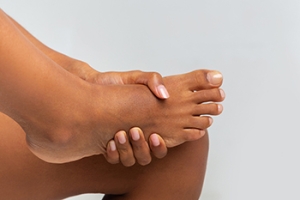
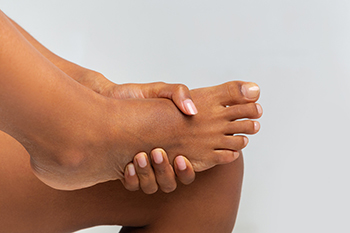
Pain on the top of the foot can develop gradually or begin suddenly after activity or injury. This area contains several small bones, joints, and tendons that help lift the foot while walking. When these structures become irritated, discomfort may appear along the upper surface of the foot and sometimes extend toward the toes or ankle. The pain may feel sharp, aching, or tight, and swelling or mild bruising may also appear. Common causes include overuse from running or walking, tight footwear that places pressure on the top of the foot, or inflammation of the tendons that help lift the toes. Stress injuries to the small bones can also occur in active individuals. A podiatrist will examine the foot, discuss recent activity, and may order imaging to identify the exact cause of the pain. Treatment may include shoe adjustments, protective support, and targeted exercises to reduce strain. If you have pain on the top of the foot, it is suggested that you make an appointment with a podiatrist.
Foot Pain
Foot pain can be extremely painful and debilitating. If you have a foot pain, consult with Joan Oloff, DPM from Los Gatos Foot and Ankle . Our doctor will assess your condition and provide you with quality foot and ankle treatment.
Causes
Foot pain is a very broad condition that could be caused by one or more ailments. The most common include:
- Bunions
- Hammertoes
- Plantar Fasciitis
- Bone Spurs
- Corns
- Tarsal Tunnel Syndrome
- Ingrown Toenails
- Arthritis (such as Gout, Rheumatoid, and Osteoarthritis)
- Flat Feet
- Injury (from stress fractures, broken toe, foot, ankle, Achilles tendon ruptures, and sprains)
- And more
Diagnosis
To figure out the cause of foot pain, podiatrists utilize several different methods. This can range from simple visual inspections and sensation tests to X-rays and MRI scans. Prior medical history, family medical history, and any recent physical traumatic events will all be taken into consideration for a proper diagnosis.
Treatment
Treatment depends upon the cause of the foot pain. Whether it is resting, staying off the foot, or having surgery; podiatrists have a number of treatment options available for foot pain.
If you have any questions, please feel free to contact our office located in Los Gatos, CA . We offer the newest diagnostic and treatment technologies for all your foot care needs.
Published in
Blog
Tagged under
Tuesday, 24 March 2026 00:00
Foot Pain
The feet, being the foundation of the body, carry all of the body’s weight and are therefore prone to experiencing pain and discomfort. If you are experiencing foot pain, it is important to determine where in the foot you are experiencing this pain to help discover the cause of it. While pain can be experienced virtually anywhere in the foot, the most common sites of foot pain are in the heel and ankle.
Heel pain can be due to a multitude of conditions including plantar fasciitis, Achilles tendinitis, and heel spurs. Pain experienced in the ankle can be a sign of an ankle sprain, arthritis, gout, ankle instability, ankle fracture, or nerve compression. In more serious cases, pain in the foot can be a sign of improper alignment or an infection.
Foot pain can be accompanied by symptoms including redness, swelling, stiffness and warmth in the affected area. Whether the pain can be described as sharp or dull depends on the foot condition behind it. It is important to visit your local podiatrist if your foot pain and its accompanying symptoms persist and do not improve over time.
Depending on the location and condition of your foot pain, your podiatrist may prescribe certain treatments. These treatments can include but are not limited to prescription or over-the-counter drugs and medications, certain therapies, cortisone injections, or surgery.
If you are experiencing persistent foot pain, it is important to consult with your foot and ankle specialist to determine the cause and location. He or she will then prescribe the best treatment for you. While milder cases of foot pain may respond well to rest and at-home treatments, more serious cases may take some time to fully recover.
Published in
Featured
Tagged under
Wednesday, 18 March 2026 00:00
Do You Suffer From Painful Feet?

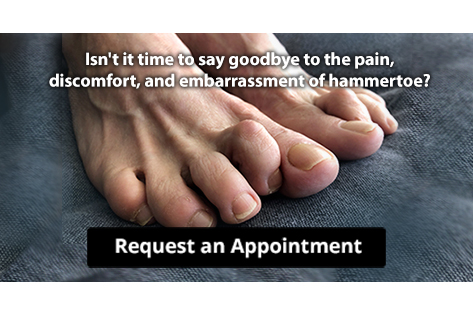
Painful deformities, such as hammertoes, can be treated. Stop living with foot pain, and have beautiful feet again!
Published in
Blog
Tagged under
Tuesday, 17 March 2026 00:00
High Heels and Damage to the Feet
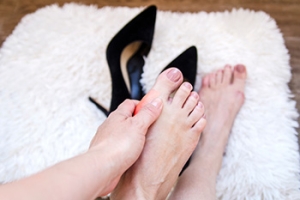
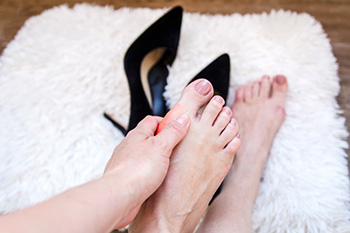
High heels may look stylish, but they can place heavy strain on the feet and the rest of the body. When the heel is lifted, body weight shifts forward onto the ball of the foot. This added pressure can lead to pain, bunions, curled toes, thickened skin, and burning sensations in the front of the foot. The higher the heel, the greater the stress. High heels also change posture. To stay balanced, the lower back arches more, the knees stay bent, and the calf muscles tighten. Over time, this unnatural position can cause soreness in the feet, knees, hips, and back. Walking in narrow heels can affect balance and increase the risk of ankle sprains or falls. Wearing high heels often may even change the shape of the foot. A podiatrist can examine your feet, identify damage caused by high heels, and provide treatment to relieve pain and prevent further problems. If you have foot pain after wearing high heels, it is suggested that you make an appointment with a podiatrist for an exam, diagnosis, and treatment.
High heels have a history of causing foot and ankle problems. If you have any concerns about your feet or ankles, contact Joan Oloff, DPM from Los Gatos Foot and Ankle . Our doctor can provide the care you need to keep you pain-free and on your feet.
Effects of High Heels on the Feet
High heels are popular shoes among women because of their many styles and societal appeal. Despite this, high heels can still cause many health problems if worn too frequently.
Which Parts of My Body Will Be Affected by High Heels?
- Ankle Joints
- Achilles Tendon – May shorten and stiffen with prolonged wear
- Balls of the Feet
- Knees – Heels cause the knees to bend constantly, creating stress on them
- Back – They decrease the spine’s ability to absorb shock, which may lead to back pain. The vertebrae of the lower back may compress.
What Kinds of Foot Problems Can Develop from Wearing High Heels?
- Corns
- Calluses
- Hammertoe
- Bunions
- Morton’s Neuroma
- Plantar Fasciitis
How Can I Still Wear High Heels and Maintain Foot Health?
If you want to wear high heeled shoes, make sure that you are not wearing them every day, as this will help prevent long term physical problems. Try wearing thicker heels as opposed to stilettos to distribute weight more evenly across the feet. Always make sure you are wearing the proper shoes for the right occasion, such as sneakers for exercising. If you walk to work, try carrying your heels with you and changing into them once you arrive at work. Adding inserts to your heels can help cushion your feet and absorb shock. Full foot inserts or metatarsal pads are available.
If you have any questions, please feel free to contact our office located in Los Gatos, CA . We offer the newest diagnostic and treatment technologies for all your foot care needs.
Published in
Blog
Tagged under
